

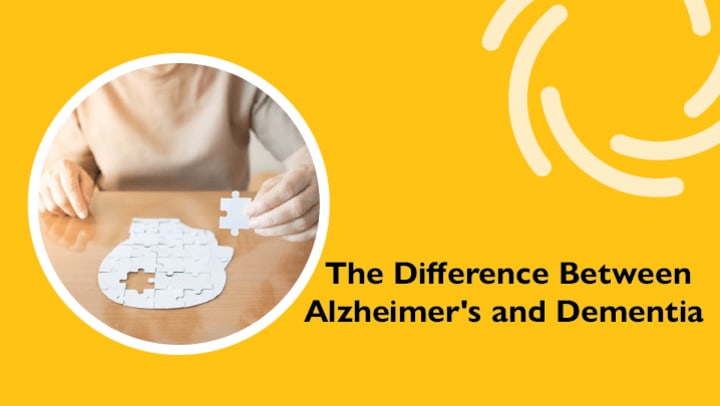
As the population ages, terms like Alzheimer's and dementia become more prevalent in conversations about health. However, there's often confusion about what these terms mean and how they relate. Understanding the distinction between Alzheimer's and dementia is helpful for anyone navigating the complexities of aging, whether as a patient, caregiver, or healthcare professional.
What is the Difference Between Alzheimer’s Disease and Dementia?
-
Dementia is an umbrella term for symptoms affecting memory, thinking, and behavior.
-
According to the Alzheimer’s Association, Alzheimer’s disease is the most common cause of dementia, accounting for 60–80% of cases and affects millions of older adults each year.
-
Not all dementia is Alzheimer’s, but Alzheimer’s is always a form of dementia.
Simply put, Alzheimer’s disease is the leading irreversible cause of dementia in older adults. Alzheimer’s is dementia, but not all dementia is Alzheimer’s. Dementia refers to a set of symptoms someone is experiencing together, including memory loss, confusion, disorientation, mood, and behavior changes. It’s important to visit a doctor who is familiar with geriatric medicine when dementia occurs because there are a variety of conditions that can cause dementia of which Alzheimer’s is just one.
—Diana Engle, Vice President of Health and Wellness, MBK Senior Living
What Is Dementia?
The term Dementia is used to describe a range of symptoms affecting cognitive function, including memory, thinking, and social abilities. The key characteristics of dementia are memory loss, cognitive decline, communication issues, disorientation, and changes in behavior. These symptoms are severe enough to interfere with daily life and can be caused by various underlying diseases or conditions.
There are several forms of dementia, each with distinct characteristics. The most common types include:
-
Alzheimer's Disease. The most prevalent form, characterized by memory loss, confusion, and changes in behavior.
-
Vascular Dementia. Caused by reduced blood flow to the brain, often following a stroke or a series of mini-strokes.
-
Lewy Body Dementia. Involves abnormal protein deposits called Lewy bodies, leading to symptoms like hallucinations, movement disorders, and cognitive decline.
-
Frontotemporal Dementia. Affects the frontal and temporal lobes of the brain, resulting in changes in personality, behavior, and language.
-
Mixed Dementia. A combination of two or more types, usually Alzheimer's disease and vascular dementia.
-
Parkinson's Disease Dementia. Occurs in people with Parkinson's disease, leading to memory problems and other cognitive issues.
-
Creutzfeldt-Jakob Disease. A rare and rapidly progressing form of dementia caused by prion proteins.
-
Huntington's Disease. A genetic disorder that causes the progressive breakdown of nerve cells in the brain, leading to dementia.
-
Wernicke-Korsakoff Syndrome. Linked to severe thiamine (vitamin B1) deficiency, often associated with chronic alcoholism.
These forms of dementia vary in their causes, symptoms, and progression, necessitating tailored approaches to diagnosis and treatment.
What Is Alzheimer's Disease?
Alzheimer's disease is a specific type of dementia. It is a progressive neurodegenerative disorder that primarily affects older adults, leading to memory loss, cognitive decline, and behavioral changes. It is the most common cause of dementia, accounting for 60-80% of cases. The disease is characterized by the accumulation of amyloid plaques and tau tangles in the brain, which disrupt the communication between neurons and lead to cell death.
The symptoms of Alzheimer's disease typically develop slowly and worsen over time. Early signs of Alzheimer’s disease often include:
-
Memory loss, particularly forgetting recently learned information.
-
Difficulty performing familiar tasks.
-
Problems with language, such as finding the right words.
-
Disorientation to time and place.
-
Poor or decreased judgment.
-
Changes in mood, behavior, and personality.
Alzheimer’s disease is often described in stages—early, middle, and late—each with progressively increasing support needs. As the disease progresses, symptoms become more severe, leading to:
-
Greater memory loss and confusion.
-
Difficulty recognizing friends and family.
-
Increased difficulty with communication.
-
Repetitive behaviors.
-
Wandering and getting lost.
-
Loss of ability to perform everyday activities.
The exact cause of Alzheimer's disease is not fully understood, but it involves a combination of genetic, environmental, and lifestyle factors.
Risk factors include advancing age, with a significant increase after age 65, and a family history of the disease, particularly if a parent or sibling is affected. Certain genes, such as APOE-e4, are associated with a higher risk.
Additionally, other contributing factors include head injuries, cardiovascular disease, and lifestyle choices such as smoking, poor diet, and lack of exercise.
When Should You See a Doctor?
Occasional forgetfulness can be a normal part of aging, but certain changes may signal something more serious. It’s important to consult a healthcare professional if you or a loved one begins experiencing symptoms that interfere with daily life or feel noticeably different from usual patterns.
You may want to seek medical guidance if you notice:
-
Memory loss that disrupts daily life, such as frequently forgetting recently learned information, important dates, or relying heavily on reminders and family members
-
Confusion about time or place, including losing track of dates, seasons, or becoming disoriented in familiar settings
-
Changes in personality or behavior, such as increased anxiety, irritability, withdrawal, or mood swings that seem out of character
-
Difficulty completing familiar tasks, like managing finances, following a recipe, or navigating routines that were once second nature
Early evaluation can help identify the cause of these symptoms, some of which may be treatable. It also allows individuals and families to plan ahead, access helpful resources, and begin supportive care that can improve quality of life.
Diagnosing Dementia
Dementia is diagnosed through a comprehensive process involving a review of the patient's medical history, symptom assessment, and input from family members. A physical examination rules out other conditions, while cognitive and neuropsychological tests evaluate memory, attention, and problem-solving abilities.
Neurological evaluations assess reflexes and coordination, and laboratory tests check for reversible causes like infections or metabolic imbalances. Brain imaging techniques, such as MRI or CT scans, identify structural brain changes, and sometimes PET scans are used to detect amyloid plaques. Psychiatric evaluations and, if necessary, genetic testing, particularly in cases with a family history of dementia, further aid in the diagnosis.
Treatment and Management of Dementia
There is currently no cure for most types of dementia, including Alzheimer’s disease, but treatments and interventions can help manage symptoms and improve quality of life. Medications include cholinesterase inhibitors, such as donepezil, rivastigmine, and galantamine, which increase levels of acetylcholine, a neurotransmitter involved in memory and learning. NMDA receptor antagonists, like memantine, help regulate glutamate to improve cognitive function. Additionally, symptomatic treatments are available to manage conditions like depression, anxiety, and sleep disturbances.
Non-pharmacological interventions include:
-
Cognitive Stimulation. Activities designed to stimulate thinking, memory, and social interaction.
-
Behavioral Therapy. Techniques to address behavioral issues and improve communication.
-
Physical Exercise. Regular physical activity to improve overall health and potentially slow cognitive decline.
-
Nutrition. Maintaining a balanced diet to support brain health.
While there is no guaranteed way to prevent dementia, certain lifestyle changes may reduce the risk. These include maintaining a healthy diet rich in fruits, vegetables, whole grains, and healthy fats; engaging in regular physical exercise; keeping the brain active through learning, puzzles, reading, and social activities; managing cardiovascular health by controlling hypertension, diabetes, and high cholesterol; and ensuring adequate and quality sleep to support cognitive function.
Support for Patients and Caregivers
Living with dementia or caring for someone with the condition can be challenging. Support systems are essential for both patients and caregivers.
-
Education. Learning about the disease and effective management strategies.
-
Support Groups. Connecting with others in similar situations for emotional support and practical advice.
-
Respite Care. Temporary care services to give caregivers a break and reduce burnout.
-
Professional Help. Seeking assistance from healthcare professionals, including doctors, nurses, and social workers.
Supporting a loved one with dementia requires patience, understanding, and adaptability. Families should educate themselves about the disease to better understand its progression and symptoms. Creating a safe and structured environment can help reduce confusion and anxiety for the person with dementia. It's important to establish routines and keep communication simple and clear. Engaging the loved one in activities they enjoy and can still participate in can provide a sense of purpose and joy.
Caregivers should also prioritize their own well-being by seeking support from friends, family, or support groups and considering respite care options to prevent burnout. Legal and financial planning is also important to ensure that future needs are met.
Frequently Asked Questions
Is Alzheimer’s hereditary?
Alzheimer’s disease is not typically inherited in a direct way, but genetics can play a role. Having a parent or sibling with Alzheimer’s may increase your risk, particularly if multiple family members are affected. Certain genes, such as APOE-e4, are associated with a higher likelihood of developing the disease. However, many people with a family history never develop Alzheimer’s, and others with no known family history do.
Can dementia be reversed?
Most types of dementia, including Alzheimer’s disease, are not reversible. However, some conditions that cause dementia-like symptoms—such as vitamin deficiencies, thyroid issues, medication side effects, or infections—can be treated and sometimes reversed if identified early. This is one reason why a thorough medical evaluation is so important when symptoms first appear.
What is the life expectancy with Alzheimer’s?
Life expectancy after an Alzheimer’s diagnosis varies depending on age, overall health, and how early the disease is identified. On average, individuals may live four to eight years after diagnosis, though some can live 10 years or longer. As the disease progresses, increasing levels of support are typically needed to ensure safety, comfort, and quality of life.
At MBK Senior Living, we believe in supporting each person with compassion, dignity, and purpose. If you’re exploring next steps for yourself or a loved one, we invite you to connect with our team and discover what thoughtful, personalized care can look like.
Find a location near you today.