

How to Set Up a Missing Man Table (Step-by-Step Guide)
You may have noticed a small, empty table set for one at a local community event. This poignant place setting honors a cherished guest who isn't there.
Rooted in military traditions, this fallen comrade table, also known as a POW/MIA table, honors service members designated as POW/MIA—Prisoners of War and Missing in Action. According to the National League of Families of American Prisoners and Missing, this specific tribute emerged to ensure missing heroes are never forgotten.Today, a traditional POW/MIA table serves as a silent reminder at everyday gatherings, often observed for Memorial Day. Arranging these symbolic items creates a powerful space of reflection for those who haven't returned home.
Want a Printable Missing Man Table Setup Guide?
If you’re planning to create your own Missing Man Table, we’ve created a simple, step-by-step printable guide you can use for your event or community.
Download the Missing Man Table Setup Guide (Free Printable)
This guide includes:
-
A complete supply list
-
Step-by-step setup instructions
-
A visual reference for proper placement
What Is a Missing Man Table?
A Missing Man Table is a symbolic display used to honor prisoners of war (POW) and those missing in action (MIA).
Each element on the table represents a part of their story—their sacrifice, their absence, and the loved ones who continue to carry their memory.
Building the Foundation: Why a Small Table and White Cloth Matter
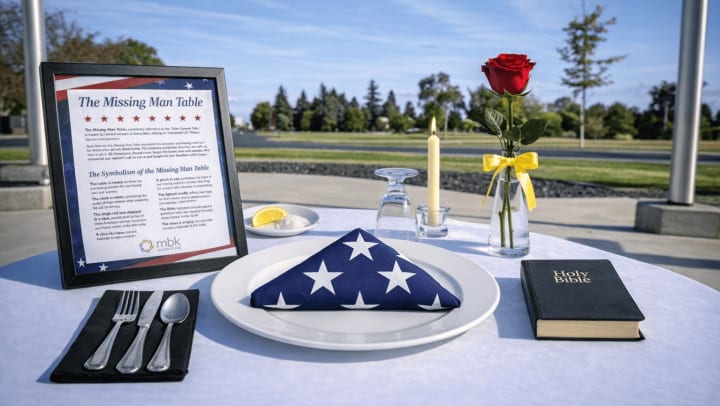
Securing the right foundation for your missing man table is the crucial first step. A small, round table is traditionally used because its circular shape represents everlasting concern—symbolizing that hope for their return never ends.
Always position this table in a highly visible “place of honor” to maximize its emotional impact.
Prepare the foundation with these steps:
-
Drape a white tablecloth over the table; this represents the purity of intention of those who served
-
Smooth all wrinkles to reflect quiet respect
-
Place a black napkin on the surface to represent the sorrow of waiting families
The Symbolism on the Plate: Deciphering the Lemon and Salt
Resting quietly on the table is a small bread plate carrying deeply meaningful elements. These simple items represent both physical sacrifice and emotional endurance.
Traditionally arranged:
-
The lemon: A single slice symbolizes the bitter fate of those captured or missing
-
The salt: A small pinch represents the tears of families waiting for answers
These elements ground the display in the reality of loss, while the full table balances that grief with remembrance and hope.
The Rose, the Candle, and the Ribbon: Symbols of Hope and Remembrance
At the center of the table, the focus shifts toward love and sacrifice.
-
The red rose represents the lifeblood of those who served and the enduring love of their families
-
The yellow ribbon, tied around the vase, symbolizes continued hope and remembrance
-
The candle represents light, peace, and the enduring presence of memory
Together, these elements create a sense of warmth and reflection.
The Final Tribute: Why the Glass Is Inverted and the Chair Remains Empty
One of the most striking elements of the Missing Man Table is the inverted glass.
Placed upside down, it represents that those being honored cannot join in the gathering.
Nearby, the empty chair is slightly pulled out, symbolizing their absence and holding space for their memory.
Create Your Own Missing Man Table
If you’re planning a Memorial Day tribute or community display, having a clear visual reference can make setup simple and consistent.
We’ve created a downloadable Missing Man Table guide that walks through each step and placement in a clean, easy-to-follow format.
Download the Missing Man Table Setup Guide
Conducting the Honors: Script and Protocol
For those hosting a formal gathering, a Missing Man Table is often accompanied by a short reading or moment of reflection.
A POW/MIA table script or remembrance message can help guide guests through the symbolism and meaning behind each element.
Some traditional displays may also include representation from each branch of the military, placed in order of establishment:
-
Army
-
Marine Corps
-
Navy
-
Air Force
-
Coast Guard
These details help deepen the tribute while maintaining respect and clarity.
Missing Man Table Checklist (Printable Available)
Setting up a Missing Man Table is an act of profound respect. While strict military precision isn't required for civilian settings, thoughtful and consistent placement ensures the meaning is clearly felt.
Here’s a simple checklist to guide your setup:
-
Small round table
-
White tablecloth
-
Dinner plate
-
Bread plate
-
Lemon slice
-
Pinch of salt
-
Single red rose
-
Yellow ribbon
-
Inverted glass
-
Candle
-
Empty chair
For a complete step-by-step layout with visual placement guidance:
Download the Missing Man Table Setup Guide (Free Printable)
Where Should a Missing Man Table Be Placed?
For the most impact, place the table:
-
In a visible, high-traffic area
-
Near an entrance, lobby, or common space
-
In a clean, uncluttered environment
The goal is to create a natural moment of reflection without disruption.
Frequently Asked Questions
What is a Missing Man Table?
A Missing Man Table is a symbolic display used to honor prisoners of war and those missing in action. Each item represents sacrifice, remembrance, and absence.
What goes on a Missing Man Table?
A traditional setup includes a white tablecloth, plate, inverted glass, lemon, salt, red rose, candle, ribbon, and an empty chair.
Why is the glass placed upside down?
The inverted glass represents that those being honored cannot participate in the gathering.
Where should a Missing Man Table be displayed?
It should be placed in a visible but respectful location, such as a lobby or shared community space.
Is there a printable Missing Man Table guide?
Yes. You can download a step-by-step printable guide here to help with setup and placement.
Download the Missing Man Table Setup Guide
A Simple Way to Honor, Together
At its core, the Missing Man Table is not about the setup.
It’s about what it represents.
A moment of pause.
A gesture of respect.
A shared understanding that some sacrifices are never forgotten.
In our communities, we believe it’s often the smallest, most thoughtful details that create the most meaningful experiences.
And this is one of them.