

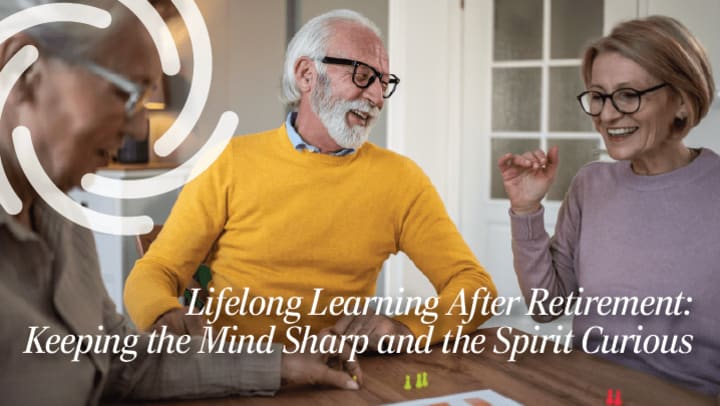
Retirement is often described as a finish line—an earned pause after decades of work and responsibility. But for many older adults, this chapter is less about slowing down and more about opening up. With time newly reclaimed, curiosity has room to breathe. Questions once postponed can finally be explored. Interests that lived quietly on the sidelines can step into the spotlight.
At MBK Senior Living, we see this every day. Residents who take up watercolor painting for the first time at 78. A former engineer learning conversational Spanish before a long-dreamed-of trip. A lifelong reader joining a discussion group that challenges long-held perspectives. These moments reflect what we call ageless exploration—the belief that learning, growth, and discovery do not belong to any one stage of life, but are essential to a life of meaning, fulfillment, and happiness at every age.
Why Learning Still Matters—Especially After Retirement
Decades of research support what many older adults know intuitively: staying mentally active supports overall well-being as we age. Learning stimulates the brain, strengthens memory, and encourages cognitive flexibility. But the benefits go far beyond brain health.
Learning invites purpose. It creates structure and anticipation. It encourages social connection and reinforces a sense of identity beyond former job titles or roles. When someone signs up for a class, joins a lecture series, or mentors others, they are saying, I am still becoming.
Retirement offers something rare: the freedom to learn without pressure. There are no grades, no deadlines, no performance reviews. Learning becomes intrinsically motivated—driven by curiosity, joy, and personal meaning. This shift often makes the experience richer and more satisfying than learning earlier in life.
Ageless Exploration: Learning as a Way of Life
Ageless exploration is not about chasing youth or keeping busy for the sake of activity. It’s about staying engaged with the world—intellectually, emotionally, socially, and creatively. Learning is a natural expression of this mindset.
For some, ageless exploration looks like formal education: university extension courses, online classes, or structured workshops. For others, it’s informal and organic: book clubs, guest speakers, documentary discussions, hands-on demonstrations, or peer-led groups where residents teach one another.
What matters is not the format, but the openness—the willingness to ask questions, try something new, and remain curious about both the world and oneself.
Learning Strengthens Social Connection
One of the most powerful—and often overlooked—benefits of lifelong learning is connection. Learning rarely happens in isolation. It thrives in conversation, collaboration, and shared experience.
Group learning creates natural opportunities for relationship-building. A class discussion leads to coffee afterward. A shared project sparks new friendships. A resident-led presentation invites recognition and respect. These moments strengthen community and reinforce the idea that everyone has something valuable to contribute.
In senior living communities, learning environments also support interdependence. Residents become both teachers and students, drawing on a lifetime of experience while remaining open to fresh perspectives. This balance honors wisdom without closing the door on growth.
Learning Builds Confidence and Resilience
Trying something new later in life can feel vulnerable. Many older adults carry quiet doubts: Will I be able to keep up? What if I’m not good at this?
But learning—especially in supportive, low-pressure environments—builds confidence. Each new skill mastered, each insight gained, reinforces a sense of capability. This confidence often spills into other areas of life, encouraging residents to be more socially engaged, physically active, and open to change.
Learning also supports emotional resilience. It provides tools for adapting to transitions, processing experiences, and making sense of a changing world. Whether it’s understanding new technology, exploring mindfulness practices, or engaging with current events, learning empowers individuals to feel informed rather than overwhelmed.
What Lifelong Learning Looks Like in Practice
Lifelong learning doesn’t require a classroom or a curriculum. It simply requires intention. In vibrant senior living communities, learning often shows up in diverse and creative ways:
-
Discussion-based learning, such as book clubs, current events groups, or philosophy circles
-
Creative exploration, including writing workshops, art classes, music appreciation, or photography
-
Skill-based learning, from cooking demonstrations to technology tutorials
-
Experiential learning, like cultural presentations, guest speakers, or community partnerships
-
Peer-led learning, where residents share professional expertise, hobbies, or life experiences
These opportunities honor different learning styles and interests while reinforcing the idea that curiosity is personal and self-directed.
Learning and Purpose Go Hand in Hand
Many retirees ask a deeper question beneath the surface: What is my purpose now?
Learning often provides part of the answer. It offers direction without obligation, engagement without exhaustion. It allows individuals to align their time with their values—whether that means understanding the world more deeply, contributing to others, or expressing creativity.
Purpose doesn’t have to be grand. Sometimes it’s as simple as preparing for next week’s discussion, practicing a new language phrase, or researching a topic that has always been intriguing. These small acts of intention accumulate, creating a life that feels active, meaningful, and self-directed.
Supporting a Culture of Curiosity
At MBK Senior Living, we believe learning thrives in environments where curiosity is encouraged and individuality is respected. Our approach to programming is not about filling calendars, but about creating opportunities—space for residents to explore interests at their own pace, in ways that feel authentic and empowering.
This means offering variety, inviting resident input, and valuing learning as a core component of wellness. It also means recognizing that learning evolves. Interests change. Energy levels fluctuate. Ageless exploration adapts, meeting people where they are while still inviting them forward.
It’s Never Too Late to Begin
Perhaps the most beautiful truth about lifelong learning is this: there is no expiration date on curiosity.
You don’t need prior experience, perfect memory, or boundless energy. You only need openness—a willingness to wonder, to ask, to engage. Learning after retirement is not about proving anything. It’s about living fully in the present while remaining connected to possibility.
In embracing lifelong learning, older adults affirm a powerful message: growth does not end with a career. Discovery does not belong to the young. The mind can remain sharp, the spirit curious, and life deeply engaging—at every age.
That is ageless exploration in action.
Ready to Explore More?
Staying active and staying curious are at the heart of living well at every age. At MBK Senior Living, our communities are designed to nurture both through vibrant programs, meaningful connections, and opportunities to keep exploring what brings joy.
Discover how MBK can support your journey. Find an MBK community near you.